GLAZING – WHAT IS IT & HOW DO WE USE IT?
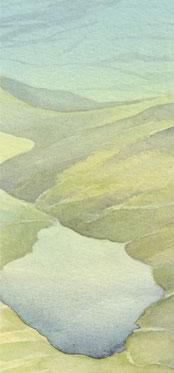
Glazing is a term I find myself using quite often in workshops. I’ll say “Just lay a glaze over this bit here, and you’ll be sorted”, or something similar, and I’ll more often than not be met by a sea of blank stares and an eager hand waving about at the back saying “What’s a glaze, sir?” actually, the ‘sir’ bit is pure fiction, but you get the picture.
I thought it would be useful to define exactly what glazing is (in the watercolour sense of the word – please, no jokes about putting new windows in), and how it might best be employed.
A glaze is a light wash. It doesn’t really differ from any other wash we might produce in watercolour, except the context in which it is usually applied. Laying a fresh wash over an earlier one is a glaze; if you are applying the new wash with the intention of correcting or altering the colour of the earlier one, for instance. A good example might be if you’ve painted a field, and the green you’ve mixed is too yellow, too garish, then a light glaze of, say, French Ultramarine, would have the effect of ‘toning it down’, and producing a more acceptable colour.
In other words, the layering of washes upon washes is what we call glazing. Most importantly, for glazing to be successful, it is crucial for the previous wash to be thoroughly dry first. The lighter the washes are, the more successful your glazing will be. Also, when laying down a wash over a previous one, you should be light to the touch – don’t apply too much pressure, or it may disturb and lift the earlier wash – allow the paint to flow from the brush freely.
Transparent pigments, by their very nature, will always work better than opaque pigments. By laying transparent washes upon transparent washes, a gradual build-up of tone will be the result. The Winsor and Newton website is a good resource for checking the properties of pigments.
A light glaze of Burnt Umber when applied to a mountain stream is great for creating ‘local colour’, and if you have a situation where your dark tones are too dark and the light tones too light, then a light glaze of something appropriate can have the effect of pulling those tones together – lightening the dark tones slightly and darkening the light respectively, in order to restore tonal balance.