Feed the Hungry Brush
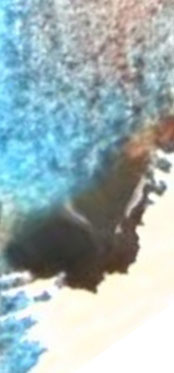
When a brushmark is applied to paper which is fixed to a board at an angle, there is usually an accumulation of paint along the bottom edge of the brushmark. This is perfectly normal, and is known as beading. It performs an important role in the creation of large washes, since it flows into subsequent brushmarks, ensuring an even transition.
Sometimes, this beading can appear along the bottom of objects when you don’t want them; remaining damp even after the surrounding wash has partially dried, and threatening to bloom into an unsightly cauliflower shape, known as a backrun (or ‘bleedback’).
There are two ways of removing this accumulation of paint:
[1] Lightly touch the tip of the beading with the corner of a piece of tissue, taking care not to apply any pressure; this will soak up the majority of the moisture, or:
[2] Run a dry, clean brush along the underside of the beading. This will soak up the moisture too (but more efficiently, over a greater length, than the tissue option). This is what is often referred to as using a ‘hungry brush’