The Value of Regular Sketching

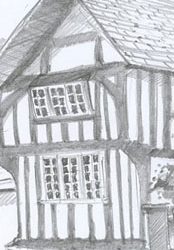
With a new DVD on Basic Drawing and Sketching Techniques reaching its final editting stage (look out for the roll-out, and special offers email in the next few weeks), pencil drawing has been very much on my mind recently.
Here is an extract from the DVD’s introduction:
The ability to draw has always been considered an essential element in watercolour painting. How much of a key role it plays in the process is very much down to the personal prefences and working practice of the individual artist, but there is no doubting its dominance.
Whether it’s being used as a lay-out tool for new compositions, or an on-site sketching tool for immediate information gathering, the pencil is the weapon of choice for serious draughtsmen.
Certainly, the parallels between pencil drawing and watercolour painting are very close. Both disciplines require that you work from light to dark, and a basic understanding of tonal values.
Pencils provide an immediate, and very accessible link between creative ideas and visual realisation. How many great projects go from being a spark of an idea in the imagination to a workable draft with little more than just a few deft sweeps of graphite on paper?
For some, drawing remains a troublesome task. the skills needed to draw something as apparently simple as a straight line or a circle eludes them, and shading techniques leave them opting to pass over the drawing bit and go straight to the painting bit – sometimes out of fear…
Yet, there is no doubt that, in whatever capacity you use the pencil, drawing will help to improve your watercolours.
I’m constantly trying to encourage students to pick up the pencil and draw things. It doesn’t really matter what you draw, as long you you try to get into the habit and do it on a regular basis.
On my weekend workshops, I use the pencil sketch as a starting point for watercolours, and am keen to promote the medium as a source for improvement. There is no doubt about it; regular sketching will have a positive impact on your painting skills – I’ve seen it happen too many times to dismiss it. Regular sketching improves hand to eye co-ordination, and helps to bridge the gap between what the eye sees, what you visualise in your mind, and what eventually ends up on the paper.
If you have a spare 10 minutes today – pick up a pencil and sketchbook, and draw something…..