Expect the Unexpected
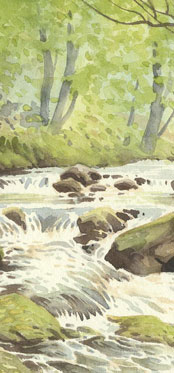
How much pre-planning to put into a painting is very much a personal issue. I often say that a rough pencil sketch and a small tonal study are prerequisites for a thorough job, both of which allow you to fully explore a subject by identifying how its tonal values are distributed and making any necessary adjustments in order to improve the composition, and knock it into some sort of shape before applying a single brushmark to the final painting. There isn’t always time for all that, though, or, let’s face it, the inclination.
Sometimes, planning a painting to the nth degree can have a retrograde effect. If you plan every tiny aspect right down to the smallest detail, then you’re probably raising your expectations too high, and setting yourself up for disaster.
At the opposite end of the spectrum is the artiist who never plans anything, but dives in with a wing and a prayer hoping it’s all just going to come together – and probably does, if they’re well-practiced at it. Such a gung-ho approach is a gamble at the best of times, but can produce spectacular results.
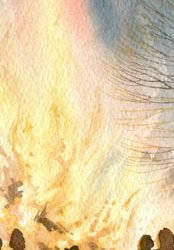
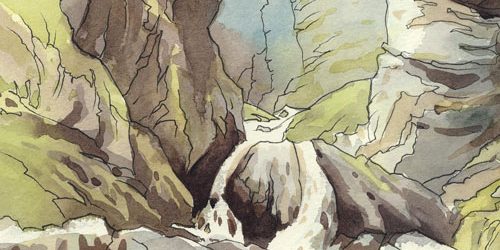
One skill that I’m often trying to encourage students to develop is that of letting things happen of their own accord, and when they do happen, don’t be demoralised by them. Just because you didn’t plan something doesn’t make it a bad thing. With a little mental re-evaluation, and on-the-fly fresh thinking, it’s possible to turn a negative into a positive (or what is sometimes referred to as a Happy Accident).
Watercolour painting is fraught with the unexpected and the unplanned. If we simply accept the premise that there are things that are going to happen beyond our control, then our lives will be made much sweeter for it. While such unplanned events can test your patience, being able to make use of them and turn them to our advantage is a skill worth honing.