Phases – and why they are important..
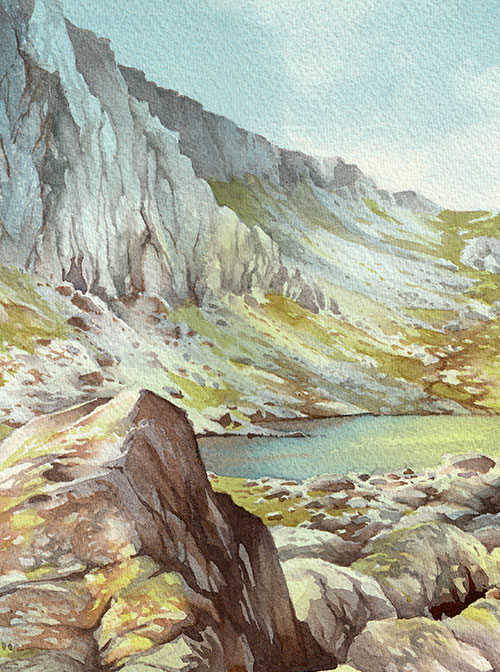
Over the years, my painting style has changed. Not always for the better, I might add… sometimes I look back at very old paintings, when I’m working through the archives, and see something that I did in a certain way back then, and wonder why it isn’t something I don’t still do now. The truth of the matter is, of course; painting is an organic process, and one that, whether we choose to or not, will inevitably change over time.
Looking back, another thing I realise is that my own watercolour journey – for good or otherwise – has taken me through several distinct phases. There was a long phase where I pre-drew all my watercolours out in Burnt Umber instead of pencil, for instance, and the phase where I was heavily into producing outdooor, on-site watercolour sketches, but then found issues with trying to replicate the spontaneity and freshness of them in the studio, and asking myself the question; why bother trying to replicate them at all, and not just settle for the ‘on-location’ interpretation… to which the answer is a long and laborious one, that I don’t want to bore you with right now…
Phases are important, however, and certainly shouldn’t be underestimated. They form part of our learning curve, and represent moments of transition – sometime big crucial moments.
I say all this because I believe I’m in the middle of such a phase as we speak. There are lots of different ways to approach a blank sheet of paper and make establishing marks with a view to progressing a particular artistic vision. I’ve always stuck to the concept of starting big, and working towards the small, along with the basic, underlying concept of working from light to dark. That doesn’t mean that I absolutely always start with the sky, but it has always been, generally speaking, one of the largest washes, and often a good starting point.
So, what’s different, you may ask?…
I’m glad you asked… here’s what I’m doing right now, that I think is significant…
The drawing-out in Burnt Umber idea is long gone and mostly buried, and I now almost always start out by drawing my scene out in pencil (far more traditional, and when it comes to working with groups in workshop situations, it’s also far less devisive). Almost without fail, my next move is to throw an all-over wet-in-wet wash at the scene, creating a loose ‘underwash’, but then – before it dries – working my way through it, lifting out any critical highlights with a piece of tissue.
Nothing groundbreaking then, I hear you say, but I assure you – from my perspective – its become a noticeable trend. I’ve always advocated carefully working around highlights in that first wash, on the understanding that untouched, clean white paper will always be whiter and brighter than paper that’s had paint lifted out from it. That’s still true, but my early-lifting-out-crucial-highlights phase rumbles on unabated… and I’m finding my results to be more spontaneous (and, if I’m honest – more satisfying) than ever, and certainly more spontaneous than that of automatically protecting those highlights with masking fluid… which hasn’t yet been a phase… and I suspect probably never will be…


