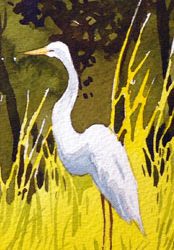
Counterchange
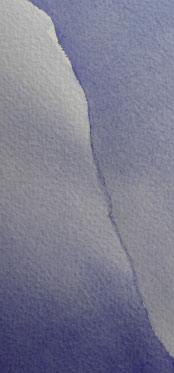
I’m always bashing on about how important contrasting tones are to a composition; without them, paintings lack definition and punch. One specific phenomenum that has always fascinated me is that known as ‘counterchange’. I notice it often when looking at distant hills; the way the sky will graduate from dark to light in one direction, while the hills appear to graduate, in almost exactly the same way, but in the opposite direction. It’s an effect that can add extra visual interest to a scene.
Of course, counterchange doesn’t just happen in the mountains. The effect can be observed in lots of different situations; it’s worth noting that our eyes regularly make small adjustments resulting in exactly the same effect. If we look at the base of a tree, for instance, it might appear light against a dark background of trees, but as we cast our eyes up into its higher branches, it might appear to change, and seem dark against the light of the sky. We know for a fact that the tree doesn’t actually change at all – it’s our eyes that make the adjustment.
In watercolour painting, it is necessary for the artist to make that adjustment for the viewer, and often a composition has to be modified in such a way as to exploit it.