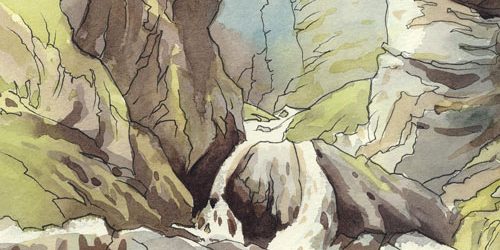
Moving Water

When you’re painting water, and waterfalls, it’s a good idea to think about what’s happening just below its surface.
Water, flowing over rocks, has shape and movement. It’s shape is directly influenced by the submerged rocks, and must make visual sense. Brushmarks on the surface of the water explain the direction of flow, and the amount of white highlights are usually a good indication of how fast the river is flowing.
Give shape to the water by graduating its tone at the point where it curves and drops – the variation in tone can also help to suggest the shapes of rocks just visible below the surface.
As with many things in watercolour, it’s often more about what you don’t paint in than what you do paint in. Take your time, and don’t rush things… water requires a bit of thought, and a delicate touch, so don’t overwork it, or it’ll get too busy, and difficult to understand.
Finally; always remember the number one rule of reflections…
The reflection of an objects must always appear directly below it, no matter where it’s being viewed from. Although surface movement of the water may distort a reflection slightly, it’s important to take care never to overdo this – it won’t make water look like it’s flowing any faster, and the result will just look odd, and unnatural.